
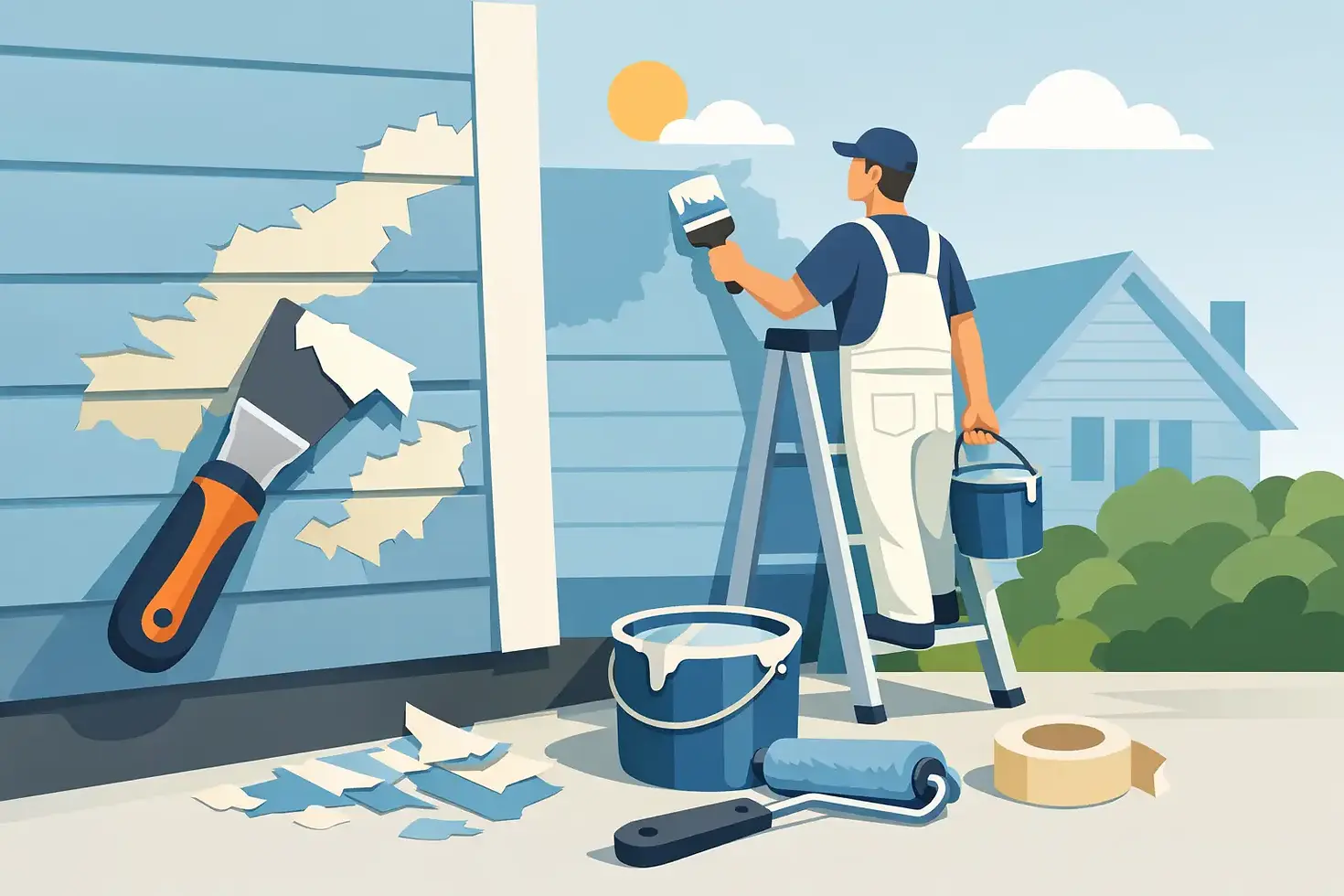
How to Fix Peeling Exterior Paint Properly

Peeling paint on the outside of a home rarely starts as just a cosmetic issue. What looks like a few loose edges on siding or trim is often a sign that moisture, failed prep, or aging coatings are starting to affect the surface underneath. If you are wondering how to fix peeling exterior paint, the right answer is not simply to paint over the damaged area. A lasting result depends on finding the cause, preparing the surface properly, and using the right products in the right order.
For homeowners and property managers in Mississauga and the GTA, this matters even more because exterior surfaces deal with snow, rain, humidity, UV exposure, and repeated freeze-thaw cycles. A quick patch may improve the appearance for a short time, but if the underlying issue remains, the peeling usually returns.
Why exterior paint starts peeling
Exterior paint peels when it loses adhesion. That loss of adhesion can happen for a few different reasons, and in many cases, more than one factor is involved.
Moisture is the most common cause. Water can get behind paint through unsealed joints, failed caulking, roof or gutter issues, damaged flashing, cracked wood, or even condensation from inside the home. When moisture becomes trapped, the coating starts to lift.
Poor surface preparation is another major reason. If the previous paint job was done over chalky paint, dirt, mildew, glossy surfaces, or loose material, the new coating may never have bonded properly. Sometimes the issue is simple age. Paint does not last forever, and older coatings eventually become brittle and lose their grip.
Product choice and application conditions also matter. Applying exterior paint in the wrong temperature range, painting in direct hot sun, or coating a damp surface can all lead to failure. Latex over old oil paint without the right primer can also create peeling problems.
How to fix peeling exterior paint the right way
A proper repair starts with inspection, not painting. Before any scraping begins, take a close look at where the failure is happening. If the peeling is concentrated around windows, soffits, fascia, door frames, or lower siding, there may be a moisture entry point nearby. If whole sections are failing evenly, age and previous prep issues are more likely.
If wood feels soft, swollen, or rotten, painting alone will not solve the problem. The damaged material may need repair or replacement first. The same applies if caulking has failed or gutters are directing water onto painted surfaces.
Once the cause is addressed, the coating itself can be repaired.
Remove all loose and failed paint
Every loose edge needs to come off. Scrape peeling and flaking areas back to a sound surface using a paint scraper or putty knife. The goal is to remove anything that is not fully bonded. If paint lifts easily beyond the visible damage, keep going until you reach a stable edge.
This is where many repairs go wrong. Homeowners often stop at the obvious blister or peel, then paint over surrounding weak spots that fail a season later. A clean, solid substrate gives the new system a real chance to hold.
On older homes, extra caution is needed. If the house was built before the late 1970s, lead-based paint may be present. In that case, safe handling and containment procedures are essential.
Sand the edges and smooth the surface
After scraping, the edges between bare substrate and remaining paint need to be feathered out. Sanding helps create a smoother transition so the repaired area does not show through the finish coat.
This step also improves adhesion. Glossy or weathered areas should be dulled and cleaned so primer can bond properly. If the surface has deep ridges or rough transitions, patching or high-build primer may be needed, especially on wood trim.
Clean the surface thoroughly
Dust, mildew, chalking, and grime can all interfere with adhesion. Before priming, the surface needs to be clean and dry. In some cases, a thorough hand wash is enough. In others, a careful pressure wash may be appropriate, provided it does not force water into joints or behind siding.
Mildew should be treated, not just painted over. Chalky surfaces need to be washed until the residue is gone. Then the area must dry completely before the next step. Dry time depends on weather, exposure, and the material being painted.
Primer is not optional on peeling areas
One of the biggest mistakes in exterior repainting is skipping primer after scraping down to bare wood, old oil paint, filler, or exposed substrate. If you want to know how to fix peeling exterior paint so it lasts, primer is a key part of the answer.
The right primer seals porous areas, improves adhesion, and helps create an even finish. Bare wood generally needs an exterior wood primer. Stained areas may need a stain-blocking primer. If there is a compatibility concern between old and new coatings, a bonding primer may be the safest choice.
Not every primer works on every surface, and this is where experience matters. Cedar, previously painted trim, fibre cement, stucco, and older wood siding can all have different requirements. Using the wrong primer may not cause immediate failure, but it can shorten the life of the repaint.
Repair small defects before topcoats
Once the primer is on and dry, small cracks, nail holes, and minor surface defects can be filled. Exterior-grade fillers and caulks should be used where appropriate. Any joints that allow water entry should be resealed with a quality exterior caulk.
Caulking has to be done carefully. Too little leaves gaps. Too much creates a messy finish and can trap moisture if used in the wrong place. Some gaps are meant to breathe, especially on certain siding systems, so not every opening should be sealed shut.
Repaint with the right exterior coating
After the repairs and primer are complete, the surface can be painted with a high-quality exterior product suited to the substrate and local climate. Two coats are often the best choice for durability, colour consistency, and long-term protection.
Application conditions matter more than many people expect. Painting too late in the day, just before temperatures drop, can affect curing. Painting in strong sun can cause the coating to dry too fast on the surface before it bonds properly. Painting when humidity is high or rain is expected can also lead to trouble.
Good results come from matching the product, surface, and weather conditions. That is one reason professionally handled exteriors tend to last longer than quick weekend repairs.
When spot repairs are enough and when they are not
Not every peeling problem requires a full exterior repaint. If the damage is isolated and the surrounding paint is still sound, a targeted repair may be reasonable. This is often the case with localised trim failure, small areas near downspouts, or one weather-exposed section of wood.
But if peeling appears in multiple elevations, across broad wall sections, or on surfaces with widespread chalking and age, spot repairs can become a short-term fix with uneven appearance. In those cases, a larger repaint may be more cost-effective and more reliable.
There is also a curb appeal factor. Even when a spot repair holds technically, patched areas can flash or look inconsistent if the existing paint has faded. For resale preparation or commercial presentation, a more complete approach is often worth it.
Signs you may need professional help
Some exterior paint failures are straightforward. Others involve hidden moisture, substrate damage, access challenges, or multiple failing layers. If paint is peeling repeatedly in the same area, if wood rot is present, or if the surface preparation feels larger than expected, professional assessment can save time and prevent repeat work.
This is especially true for multi-storey homes, older properties, and projects where ladders, sanding, patching, carpentry touch-ups, and weather timing all need to be managed correctly. A proper exterior repair is as much about protection as appearance.
At Unique Painting Ltd., exterior painting projects are approached with that full picture in mind - surface condition, preparation, product compatibility, and finish quality all have to work together for the result to last.
The cost of doing it halfway
Peeling paint has a way of growing. A small untreated section can expose wood, invite more moisture, and lead to larger repairs later. Even when the substrate is not yet damaged, repeated repainting without proper prep usually costs more over time than fixing the problem properly once.
That does not mean every project needs the most extensive solution. It means the repair should match the cause. Sometimes that is a straightforward scrape, prime, and repaint. Sometimes it includes carpentry repairs, caulking replacement, and a larger repaint strategy.
If you are dealing with peeling exterior paint, the smartest next step is to slow down, inspect the surface carefully, and fix the reason the coating failed before reaching for a brush. A good exterior paint job should do more than look fresh - it should protect the property for years.


Comments