
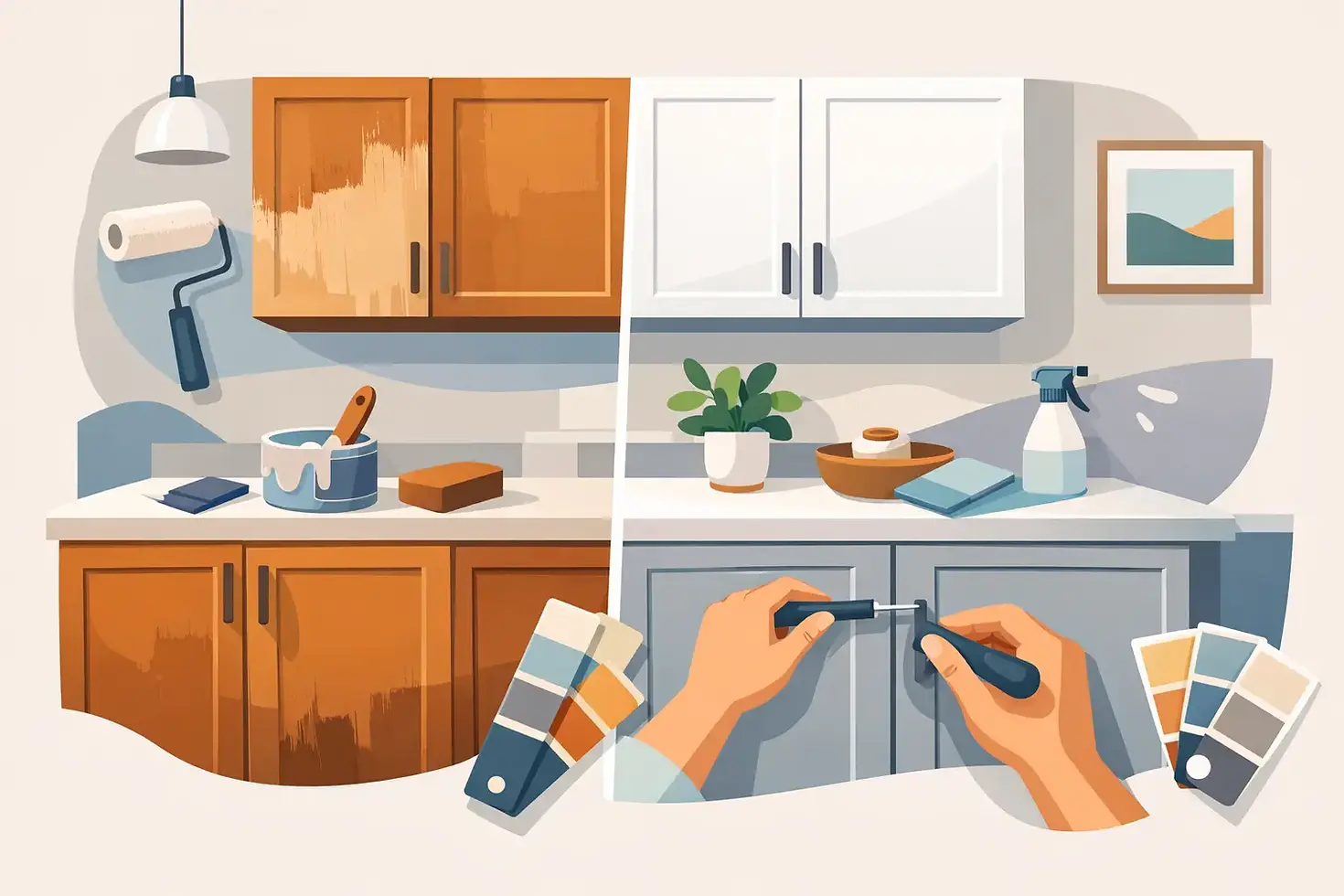
How to Refresh Kitchen Cabinets Properly

A tired kitchen usually shows up in the cabinets first. When doors look dull, greasy, chipped, or dated, the whole room feels older than it is. If you are wondering how to refresh kitchen cabinets without taking on a full renovation, the good news is that you have several practical options - and the right one depends on the condition of the cabinets, your budget, and how long you want the result to last.
For many homeowners in Mississauga and the GTA, cabinet refreshing is one of the most cost-effective ways to improve the appearance of a kitchen. It can make the space feel cleaner, brighter, and more current without changing the layout. But not every cabinet refresh delivers the same result. A quick cosmetic update can work in some kitchens. In others, proper surface preparation and a professional spray finish are what separate a short-term fix from a lasting upgrade.
How to refresh kitchen cabinets based on their condition
The first step is not picking a colour. It is figuring out what you are working with.
Solid wood cabinets in decent shape are usually strong candidates for refinishing or repainting. If the door fronts are structurally sound and the boxes are still performing well, a refresh often makes more sense than replacement. Laminate or thermofoil cabinets can be more complicated. Some can be painted successfully with the right prep and products, while others are poor candidates if the surface is peeling, swollen, or failing around edges.
Water damage also changes the conversation. If sink-base cabinets are soft, warped, or delaminating, paint alone will not solve the issue. The same applies to severe grease buildup that has been left for years. Cabinets in that condition may still be restorable, but they need more preparation and sometimes minor repair work before any finish goes on.
This is why a proper assessment matters. Homeowners often focus on colour, but finish failure usually starts with surface problems, not product choice.
Start with cleaning, not painting
One of the most overlooked parts of cabinet work is cleaning. Kitchens collect grease, hand oils, food residue, and fine dust, especially around stove areas, pulls, and upper doors. Even cabinets that look fairly clean can carry enough residue to interfere with adhesion.
If you are planning a light refresh, such as washing the cabinets, changing hardware, and touching up worn spots, cleaning may be enough to make a noticeable difference. A good degreasing process can remove the sticky film that makes cabinets look yellowed or tired. In some kitchens, this step alone improves the appearance more than expected.
If you are repainting, cleaning is non-negotiable. Skipping it or rushing it often leads to peeling, fisheyes, uneven sheen, or soft spots in the finish. Any contractor who takes cabinet painting seriously will treat cleaning and prep as a core part of the job, not a minor detail.
When a simple refresh is enough
Not every kitchen needs a full spray refinish. If the cabinet colour still works and the finish is mostly intact, a smaller update can go a long way.
Replacing handles and knobs can change the style quickly. Swapping dated brass hardware for matte black, brushed nickel, or a cleaner modern profile often gives cabinets a more current look. Soft-close hinge upgrades can also improve how the kitchen feels day to day, even though they do not change the appearance much.
Touch-up painting can help if damage is minor and isolated. Small chips around pulls, light scuffs near lower doors, or faded toe kicks can often be corrected without refinishing the full set. That said, touch-ups rarely disappear completely on older painted cabinets. They can improve the look, but they do not always create a perfectly uniform result.
New lighting also changes how cabinets present. Under-cabinet lighting can make existing finishes look warmer, cleaner, and less shadowed. It is not a cabinet solution on its own, but it can support the overall refresh.
Repainting cabinets for a full visual upgrade
If you want the kitchen to look genuinely updated, repainting is usually the most effective approach. It gives you control over colour, sheen, and overall style while keeping the existing layout in place.
This is where many DIY attempts run into trouble. Cabinet surfaces take more abuse than standard walls. They are touched constantly, exposed to moisture and grease, and viewed up close in direct light. Brush marks, roller texture, drips, and weak adhesion stand out immediately.
A durable cabinet repaint involves more than applying a coat of paint. Doors and drawers should be removed, labelled, cleaned, sanded or mechanically abraded, and primed as needed. Damage may need filling. The finish coat needs to be suitable for cabinetry, not just general interior trim. Drying and curing also matter. Cabinets may feel dry within hours but still need time before they can handle full use.
For the most polished result, sprayed finishes are typically the better option. They produce a smoother, more consistent surface than hand brushing, especially on shaker doors, slab fronts, and larger drawer faces. In a kitchen, that cleaner finish often reads as more expensive and more durable.
Colour choices that actually work in real kitchens
When homeowners think about how to refresh kitchen cabinets, colour is usually the turning point. The best choice is not always the trendiest one. It is the one that fits your lighting, flooring, counters, backsplash, and long-term plans.
White remains popular because it brightens the room and works well for resale. But not every white performs the same way. In north-facing kitchens, a stark white can feel flat or cold. In warmer kitchens, a softer off-white or creamy neutral may be a better fit.
Greige, warm grey, taupe, and muted green have become strong cabinet colours because they add character without overwhelming the space. Darker tones, such as navy or charcoal, can look excellent on lower cabinets or islands, but they tend to show dust, fingerprints, and wear more easily.
If the kitchen is small or has limited natural light, lighter cabinet colours usually help. If the room already has enough brightness and contrast, deeper colours can add a custom look. The practical side matters too. A beautiful colour that constantly shows smudges may not feel like the right choice after a few months.
The prep work that determines whether it lasts
A cabinet finish is only as reliable as the prep underneath it. This is where professional workmanship really shows.
Proper prep includes protecting surrounding surfaces, removing doors and hardware, cleaning thoroughly, sanding or deglossing, spot repairs, caulking where appropriate, and using compatible primers and topcoats. Each step affects the final result. If one part is skipped, the finish may still look good at first, but it is more likely to fail under normal kitchen use.
There is also a difference between paint that looks good for six months and paint that still performs well after years of wiping, opening, and cleaning. Kitchens are high-contact spaces. Durability matters as much as colour.
For homeowners comparing contractors, this is an area worth asking about. What products are being used? How are the doors finished? Are they brushed on site or professionally sprayed? What level of protection is included for floors, counters, and adjacent rooms? A lower quote can sometimes mean less prep, fewer coats, or weaker products.
DIY or hire a professional?
It depends on your expectations.
If the cabinets are small in number, already in fair condition, and you are comfortable with detailed prep work, a DIY refresh may be reasonable. This is especially true for simple cleaning, hardware replacement, and minor touch-ups.
If you want a factory-smooth finish, a major colour change, or a result that holds up in a busy family kitchen, hiring a professional usually makes more sense. Cabinet painting is detail-heavy work. It also requires space, dust control, drying management, and product knowledge. Mistakes are visible, and correcting them often costs more than doing it properly the first time.
For many homeowners, the real value is not just appearance. It is accountability. Working with an experienced, insured contractor gives you a clearer process, better protection for your home, and a stronger chance of getting the finish you expected. That matters when the kitchen is one of the most used rooms in the house.
What to expect from a professional cabinet refresh
A professional cabinet refresh should feel organized from the start. There should be a clear plan for prep, surface repairs, finish application, and reinstallation. Timelines should be realistic, especially because drying and curing are part of quality control, not wasted time.
In many cases, cabinet doors and drawer fronts are removed for spraying, while boxes are prepared and finished on site. This approach helps achieve a more even result while reducing disruption where possible. Cleanliness also matters. Kitchen work should include careful masking and protection because overspray, dust, and poor containment can affect nearby surfaces fast.
At Unique Painting Ltd., cabinet spraying and surface preparation are handled with the same focus on workmanship, finish quality, and customer protection that property owners expect from a professional painting contractor. That matters when you are upgrading a key room and want the result to look sharp and last.
A cabinet refresh does not need to turn into a full renovation to make a real difference. If the structure is sound and the finish is handled properly, refreshed cabinets can give your kitchen a cleaner, more current look without the cost and disruption of full replacement. The best starting point is simple: look past the colour you want and focus first on the condition, the prep, and the quality of the finish you are putting back on.



Comments