
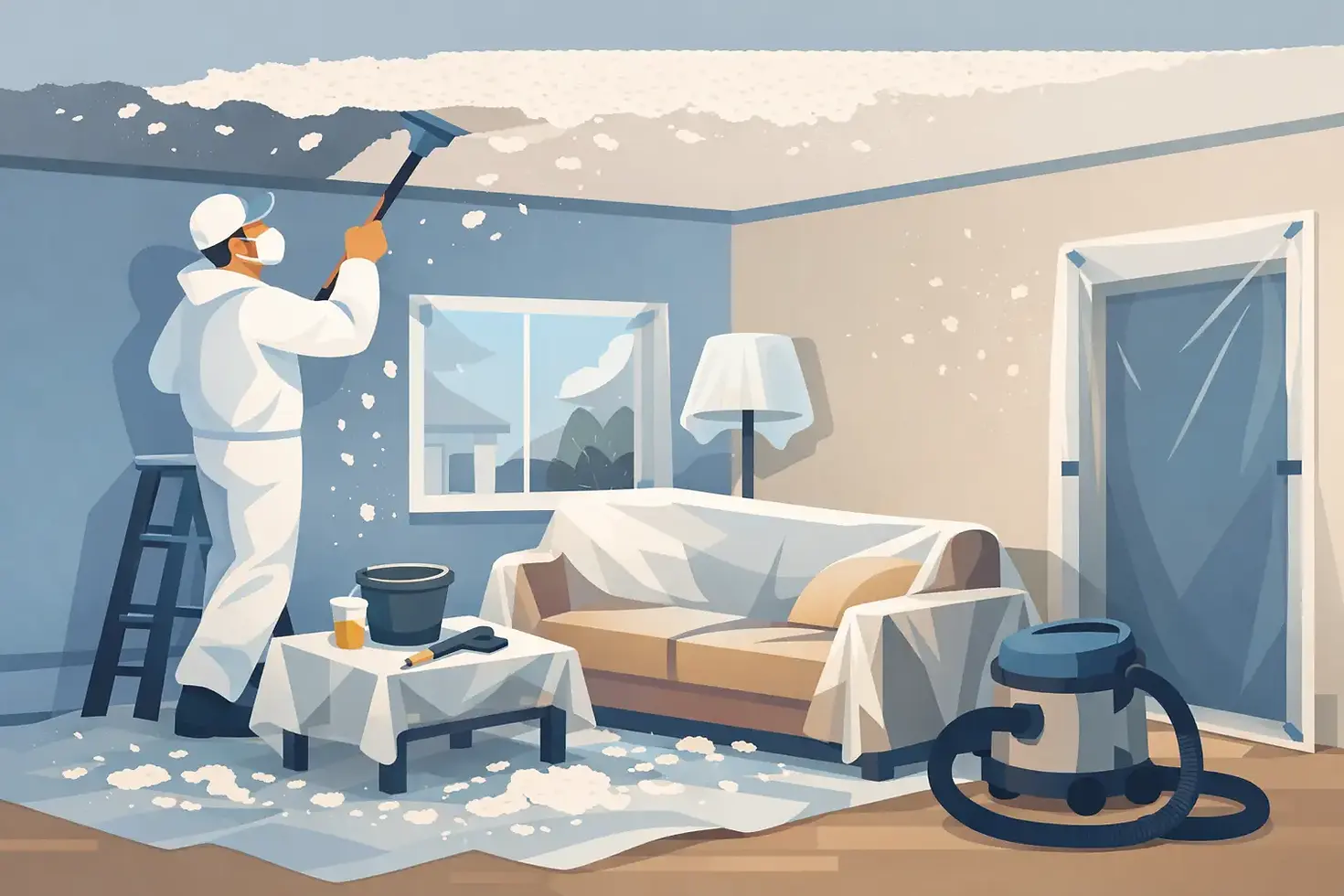
Is Popcorn Ceiling Removal Messy? What to Expect

A popcorn ceiling can make an otherwise updated room feel dated, especially when new paint, flooring, and fixtures draw attention upward. But before planning the upgrade, many homeowners ask: is popcorn ceiling removal messy? Yes, it can be - particularly when the ceiling is scraped without proper preparation, containment, and cleanup. With the right process, however, the mess can be controlled and your home can remain protected throughout the work.
For homes in Mississauga, Toronto, and across the GTA, the real question is not whether some dust and debris will be created. It is whether the work is handled in a way that protects flooring, furniture, HVAC systems, walls, and the people using the space.
Why popcorn ceiling removal creates a mess
Popcorn ceilings are made from a textured compound applied over drywall. During removal, that textured layer must be softened or otherwise broken down, then scraped away. The material falls as damp debris, dry particles, or a combination of both, depending on the ceiling’s finish and the method used.
A ceiling that has been painted can be more difficult to remove cleanly. Paint may prevent water from soaking into the texture, which means more sanding, patching, or surface preparation may be required. Older ceilings can also have previous repairs, loose areas, stains, or uneven drywall underneath the texture. Those conditions do not necessarily prevent removal, but they affect the amount of prep work needed for a polished finish.
The mess is often greater when people underestimate what happens after scraping. Removing the texture is only one stage. The exposed ceiling usually needs repairs, joint-compound work, sanding, priming, and painting. Fine sanding dust is often the part that travels furthest if the work area is not properly sealed.
Is popcorn ceiling removal messy when done professionally?
Professional popcorn ceiling removal is still a renovation process, but it should not mean living with dust throughout the house or finding debris in adjacent rooms for weeks. Clean execution starts before a scraper touches the ceiling.
A careful crew removes or protects furniture, covers floors with durable drop protection, seals doorways and openings as needed, and protects wall surfaces, light fixtures, vents, and fixed cabinetry. Containment is especially important in open-concept homes, where dust can otherwise move easily into kitchens, hallways, and living areas.
The ceiling is typically treated in manageable sections rather than soaked indiscriminately. Proper moisture control helps loosen the texture while avoiding unnecessary water damage to drywall. Debris is collected as work progresses instead of being left across the floor until the end of the day.
After scraping, the ceiling is inspected for damage that was hidden by the texture. Nail pops, drywall seams, cracks, and uneven areas are repaired before sanding and finishing. This preparation is what separates a merely removed popcorn ceiling from a ceiling that looks smooth, consistent, and ready for quality paint.
At Unique Painting Ltd., this type of project is approached as a complete finishing service, not simply a scraping job. Protection, surface repairs, priming, painting, and cleanup all matter because the final result must look intentional from every angle.
The biggest factors that affect the level of mess
Every ceiling is different. A small, empty bedroom with accessible flooring is far easier to contain than a furnished main floor with vaulted ceilings, built-in lighting, and connected living spaces.
The age and condition of the ceiling matter as well. Texture that has never been painted may soften and release more easily. Multiple paint coats can make removal slower and may require additional repairs once the texture is gone. Water stains can also signal a leak that should be addressed before cosmetic work begins.
The finish you want afterward changes the scope. A basic smooth ceiling requires proper patching and sanding. A high-end, flat painted finish under bright pot lights can require more detailed skim coating because angled lighting exposes even minor imperfections. There is a trade-off: the smoother and more refined the desired result, the more careful preparation the ceiling needs.
Occupied homes require added protection and coordination. Homeowners may choose to clear smaller rooms themselves, while larger furnishings can be carefully covered in place. In either case, it is wise to keep children, pets, and anyone sensitive to dust away from the work zone until cleanup is complete.
Older popcorn ceilings need a safety check first
Before any disturbance, older textured ceilings should be considered carefully. Some ceiling textures and related materials may contain asbestos, particularly in older properties. You cannot confirm the presence or absence of asbestos by appearance alone.
Do not scrape, sand, drill into, or wet an older popcorn ceiling until appropriate testing has been considered. If testing identifies asbestos-containing material, removal must follow the proper safety and regulatory requirements. Covering or encapsulating the ceiling may sometimes be a practical option, but that decision should be based on the material condition, the future renovation plan, and qualified advice.
This step may feel like a delay, but it protects everyone involved. A responsible contractor will not treat an unknown older ceiling as a routine demolition task.
What homeowners can do before removal starts
The best cleanup begins with good planning. Remove small décor, curtains, electronics, artwork, and loose items from the room whenever possible. Clear shelves and closets near the work area, and make arrangements for valuables that cannot be easily protected.
You should also discuss access, parking, work hours, pets, alarm systems, and any areas that need to remain usable. If the ceiling is being removed as part of a larger painting project, confirm the sequence of work. Ceiling repairs and painting should normally happen before fresh wall paint, helping prevent avoidable touch-ups.
Avoid trying to speed up the project by scraping a test area yourself unless you have confirmed the material is safe and understand the repair work that may follow. A small damaged section can create an uneven transition that requires more extensive patching later.
Removal is not always the best option
Scraping is popular because it can modernize a room and create a cleaner ceiling line. Still, it is not the only solution. In some cases, skim coating over an appropriate existing texture, installing new drywall over the ceiling, or encapsulating the surface may be a better fit.
Skim coating can reduce demolition debris, but it demands skill to avoid a wavy or heavy-looking finish. Covering a ceiling with drywall can create a fresh surface but may affect trim, lighting, ceiling height, and access to fixtures. Encapsulation may be suitable where removal is not advisable, though it does not eliminate the texture itself.
The right choice depends on the ceiling’s condition, the home’s age, the desired finish, and the budget. A clear on-site assessment is more useful than assuming every popcorn ceiling should be scraped.
What a clean finished result should look like
Once removal, repairs, sanding, priming, and painting are complete, the ceiling should have a consistent appearance without visible scrape marks, patch outlines, flashing, or rough transitions around light fixtures and wall lines. The room should also be returned in clean condition, with protection removed and renovation debris properly collected.
A freshly finished ceiling often has a larger visual effect than homeowners expect. It can make rooms feel taller, brighter, and more current, while allowing new lighting and wall colours to stand out for the right reasons.
If you are considering popcorn ceiling removal, plan for it as a controlled finishing project rather than a quick weekend scrape. The right preparation reduces the mess, protects your property, and gives the updated ceiling the smooth, durable result your space deserves.


Comments