
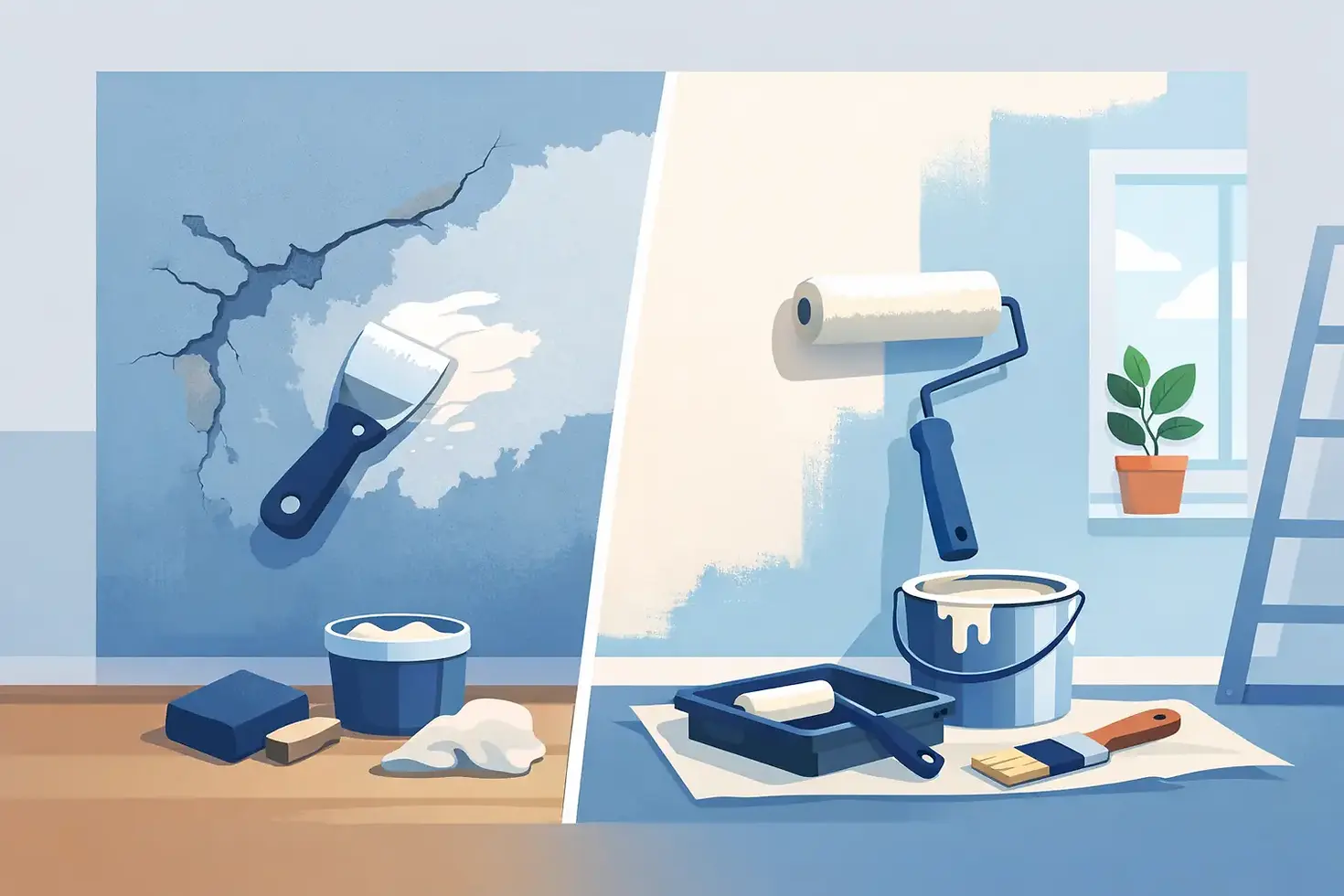
Wall Repair Before Painting Done Right

A fresh coat of paint can only look as good as the surface under it. That is why wall repair before painting is not an extra step - it is the step that decides whether the finished room looks clean and professional or rushed and uneven.
Homeowners and property managers across Mississauga and the GTA often focus on colour selection first. The better question is what the walls will show after the paint dries. Small dents, popped screws, hairline cracks, old anchor holes, tape damage, and patched areas that were not finished properly all become more noticeable once new paint goes on, especially in daylight or rooms with side lighting.
Why wall repair before painting matters
Paint does not hide defects nearly as well as people expect. In many cases, it does the opposite. A new finish can highlight texture changes, rough patches, and shallow depressions that were easy to ignore when the old paint was faded or the wall colour was darker.
This matters in homes, offices, retail units, and rental properties. If you are preparing a space for resale, tenant turnover, or a business refresh, surface condition affects the first impression as much as the paint colour itself. A polished result comes from proper preparation, not just premium paint.
There is also a durability factor. If cracks, loose joint tape, moisture damage, or soft drywall are painted over, the problem usually returns. You may get a short-term cosmetic improvement, but not a lasting finish. Repairing the surface properly helps the paint bond better and wear more evenly over time.
What should be fixed before painting a wall?
The answer depends on the age of the space, the wall condition, and the kind of finish you want. In a newer home, the work may be limited to nail pops, settlement cracks, and a few small dents. In older properties, repairs often include larger drywall patches, damaged corners, previous poor-quality mud work, wallpaper damage, or stains that need special treatment before priming.
Common wall issues that show through paint
Small picture-hook holes are usually simple. The bigger issue is often the cluster of minor defects that collect over time. Door handle impacts, furniture scuffs, previous patch jobs, and uneven sanding all create a wall that looks busy once it is repainted.
Cracks need closer attention. A fine hairline crack may only need opening slightly, filling, sanding, and priming. A recurring crack around corners, ceiling lines, or joints can point to movement or weak tape. In that case, a quick filler job may not hold for long.
Water stains are another example where appearances can be misleading. If the source of the moisture has been addressed, the drywall may still need repair, stain-blocking primer, or partial replacement. Painting directly over a stain often leads to bleed-through.
When a patch is not enough
Some walls are too damaged for spot repairs alone. If there are many patches, widespread surface tearing, old wallpaper adhesive, or heavy texture inconsistencies, skim coating or broader surface preparation may be the better route.
This is where experience matters. The goal is not simply to fill holes. It is to create a uniform surface that looks consistent under final paint. A wall can be technically repaired and still look poor if the repaired sections flash differently, feel rough, or reflect light unevenly.
The real process behind professional wall repair before painting
Professional prep work is methodical. It starts with inspection, because not every wall problem should be treated the same way. A dent in drywall, a structural crack, a water-damaged section, and a failed corner bead each need different repair methods.
Next comes removal of anything loose or unstable. Flaking material, weak filler, lifted tape, damaged drywall paper, and protruding fasteners have to be dealt with before patching begins. Filling over a failing surface only delays the problem.
Once the damaged area is stable, patching compounds or drywall materials are applied in layers as needed. Drying time matters here. Rushing from one coat to the next can cause shrinkage, visible edges, or weak repairs. After that, sanding blends the repaired section into the surrounding wall so it disappears under primer and paint.
Primer is often where DIY jobs go off track. Repaired areas can absorb paint differently than the original wall. Without proper priming, patched spots may flash through the finish, even if the colour match is correct. On stained or repaired surfaces, the right primer helps create a more even topcoat and better long-term hold.
Why some repairs become more visible after painting
Many people assume that once a wall is smooth to the touch, it is ready for paint. That is not always true. Walls need to be visually flat as well as physically smooth.
Side lighting exposes almost everything. Hallways, living rooms with large windows, office boardrooms, and condo units with bright natural light are especially unforgiving. A patch that looked acceptable before painting can suddenly stand out because the surface was not feathered widely enough or because the texture around it does not match.
Sheen also changes the equation. Flat paint is more forgiving than eggshell, satin, or semi-gloss. The more light a finish reflects, the more surface defects it tends to reveal. If a client wants a higher-sheen finish for durability or washability, the prep standard usually needs to be higher too.
DIY repairs versus hiring a professional
There are cases where a homeowner can handle minor prep successfully. A few pinholes or a small dent in a low-visibility area may be manageable with the right filler, sanding, and spot priming.
The trade-off is consistency. Most paint projects do not fail because of one obvious mistake. They fall short because of many small prep issues that add up across the room. One patch sits proud of the wall, another shrinks, another flashes through, and the final paint highlights all of it.
For larger repairs, recurring cracks, water damage, or full-room repainting where finish quality matters, professional repair work saves time and usually delivers a cleaner result. It also keeps accountability with one contractor handling both the surface prep and the painting. That matters when the goal is a polished finish, not a patchwork look.
When wall repair before painting is especially worth it
If you are listing a home, preparing a rental between tenants, updating an office, or refreshing a high-traffic family space, repairs should not be treated as optional. These are the projects where visible wall damage can make the entire property feel less cared for.
The same applies after wallpaper removal or popcorn ceiling removal. Those services often expose surface damage that needs correction before painting can begin. Trying to speed past that stage usually leads to disappointing results and additional cost later.
For commercial properties, the standard is often even higher. Customers, tenants, and staff notice finish quality, even if they cannot explain exactly why a space feels polished or neglected. Smooth walls, clean lines, and even paint help communicate professionalism.
Choosing a contractor for wall repairs and painting
If you are hiring out the work, ask how the contractor handles prep, not just how quickly they can paint. Surface repair is where quality control starts.
A dependable contractor should be able to explain what needs repair, what can be blended, what may need broader skim work, and how the repaired areas will be primed before finish coats. Insurance coverage, workmanship warranty, and experience with both residential and commercial spaces also matter. They protect the client as much as the property.
This is one reason many clients prefer a full-service painting company rather than coordinating separate trades. With one team managing the repairs and the paint application, there is less guesswork, clearer accountability, and a better chance of a uniform final result. For property owners in Mississauga and the GTA, Unique Painting Ltd. approaches projects that way - with surface preparation treated as part of the finished standard, not an afterthought.
The finish starts before the first coat
Good paint can improve a room quickly, but it cannot correct poor preparation. If the walls are cracked, dented, stained, or uneven, those issues deserve attention before any brush or roller comes out.
A well-repaired wall gives the paint the surface it needs to look smooth, consistent, and built to last. If you want the finished space to feel clean, well cared for, and professionally completed, start where the result actually begins - with the repair work underneath.



Comments