
Best Coatings for Retail Stores That Last

A retail finish has to do more than look good on opening day. It must stand up to carts, footwear, fixtures, stock deliveries, cleaning routines, handprints, and frequent layout changes. The best coatings for retail stores balance appearance with cleanability, durability, and practical maintenance so the space continues to support your brand after months of daily traffic.
For store owners and property managers in Mississauga, Toronto, and across the GTA, the right answer depends on the surface and how the business operates. A quiet boutique, a busy convenience store, a restaurant-adjacent retailer, and a warehouse-style showroom all place different demands on their walls, floors, ceilings, and trim.
Best Coatings for Retail Stores by Surface
A professional coating plan starts with the surface, not the colour chip. Each area needs a finish suited to its exposure, cleaning requirements, and visual role in the customer experience.
Walls: Washable acrylic or acrylic-latex paint
For most retail interiors, premium washable acrylic or acrylic-latex paint is the dependable choice. It provides consistent colour, low odour options, and enough toughness for common scuffs, fingerprints, product handling, and routine cleaning. This makes it well suited to sales floors, fitting rooms, corridors, staff areas, and checkout zones.
An eggshell or satin sheen is often the most practical choice for customer-facing walls. Both are easier to wipe down than flat paint while maintaining a refined appearance. Satin generally offers slightly greater moisture and stain resistance, but it can reveal poor drywall repairs or uneven texture. Eggshell is more forgiving and often works well in boutiques, offices, and specialty stores where the walls are not subjected to constant contact.
Flat paint can still have a role on high ceilings or low-touch feature walls. Its non-reflective appearance can make colours look rich and hide minor surface variation. The trade-off is that it is harder to clean, so it is rarely the right finish for busy aisles, entrances, or areas beside shelves and display racks.
Floors: Epoxy and polyurethane systems
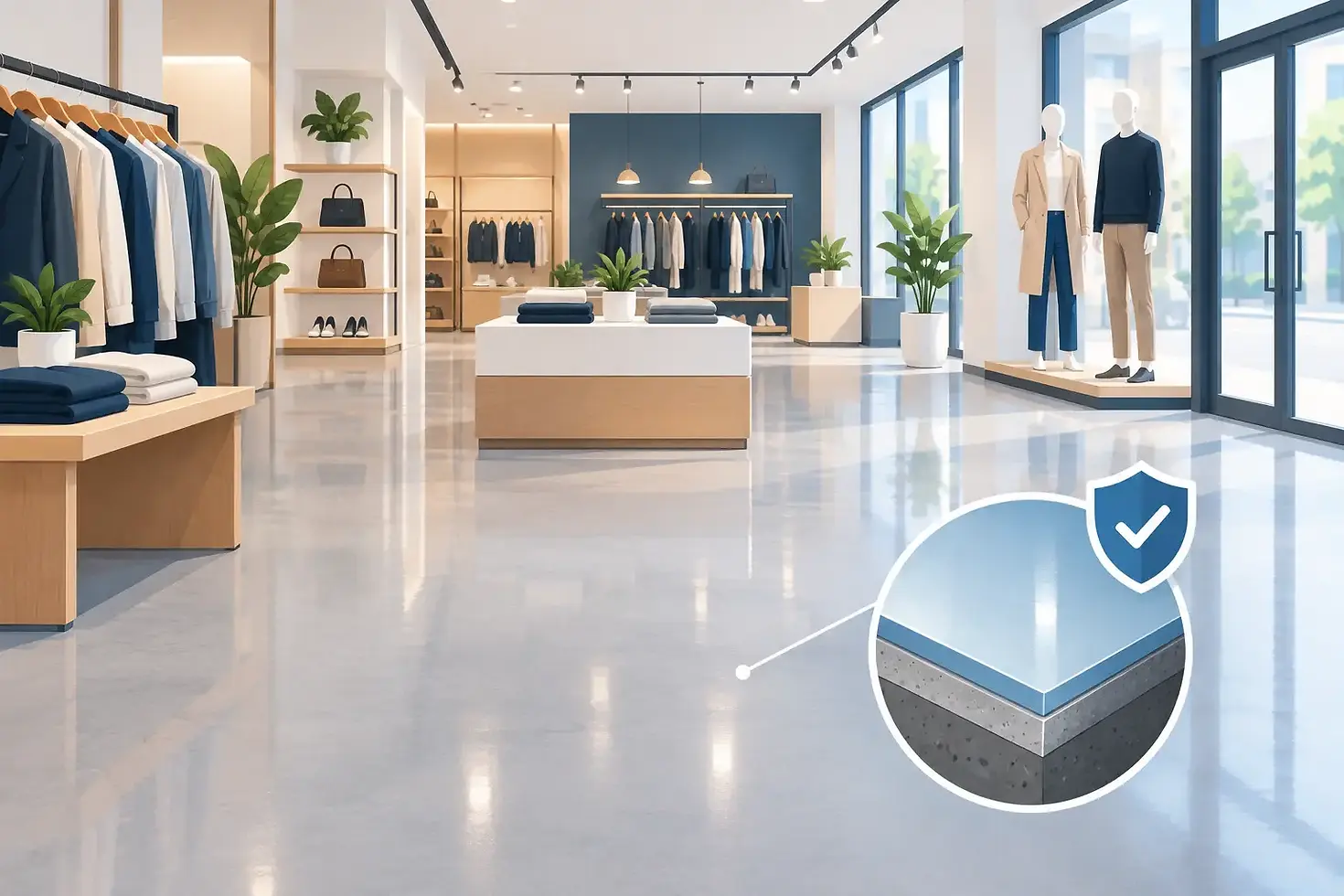
Retail flooring receives the most direct punishment. Standard wall paint is never an appropriate substitute for a purpose-built floor coating. Where concrete floors are exposed in stockrooms, showrooms, salons, auto-related retail spaces, or back-of-house areas, epoxy is a proven option.
Epoxy coatings create a hard, attractive surface that resists abrasion, many stains, and frequent cleaning. They are available in solid colours, decorative flakes, and other finishes that can support the store's look while making the floor easier to maintain. For spaces where shoppers may walk on the surface, slip resistance should be considered from the beginning. A glossy floor may look sharp, but it can become hazardous when wet if the coating system does not include the right texture or aggregate.
Polyurethane topcoats are often used over epoxy because they offer stronger resistance to UV exposure and surface scratching. This matters near large storefront windows, entrances, or areas with significant daylight. Epoxy can yellow over time in direct sunlight, while polyurethane helps protect the finish and preserve its appearance.
Floor preparation determines whether the system lasts. Concrete must be clean, dry, sound, and properly profiled before application. Oil contamination, existing failing coatings, moisture vapour, and cracks need to be addressed first. Skipping this work can lead to peeling, blistering, or premature wear, regardless of how high-quality the coating itself may be.
Trim, doors, and millwork: Durable enamel coatings
Door frames, baseboards, shelving, cabinetry, and service counters are touched more often than most owners expect. A durable waterborne enamel is a strong choice for these areas. It dries to a smooth finish, resists scuffing better than standard wall paint, and is easier to clean after contact with shoes, carts, bags, and cleaning equipment.
Semi-gloss is a common option for trim and doors because it stands up well to wiping. In stores with a more contemporary, understated design, satin enamel can provide similar practicality with less shine. The right sheen should also account for the condition of the surface. Higher-gloss finishes reflect more light and can expose dents, brush marks, and old coating failures if preparation is incomplete.
Metal surfaces: Direct-to-metal and rust-inhibiting coatings
Retail spaces often include metal doors, railings, security grilles, exposed fixtures, bollards, and delivery-area components. These surfaces require more than a standard interior paint if they are exposed to moisture, temperature changes, or abrasion.
A direct-to-metal coating or a system that includes a rust-inhibiting primer is usually the better approach. Any loose coating and corrosion should be removed, and the surface must be cleaned thoroughly before priming. In loading areas and exterior-facing entries, the coating needs to protect the metal as well as improve its appearance.
Match the Finish to How the Store Operates
The best coating is not always the toughest product on the shelf. A high-build industrial floor coating may be excessive for a low-traffic boutique, while a basic interior wall finish may fail quickly in a busy grocery, pet supply store, or children’s retailer.
Consider where damage actually occurs. Entrance walls, cash wraps, fitting rooms, staff corridors, washrooms, and receiving areas usually need more durable, washable coatings than high feature walls. A thoughtful specification places the higher-performance products where they produce the most value, rather than treating every surface identically.
Cleaning practices also matter. If staff use disinfectants or degreasers regularly, choose coatings that can withstand the intended cleaning products. Harsh cleaners can dull or weaken an incompatible finish over time. It is better to confirm the maintenance plan before selecting a coating than to discover a problem after the store is open.
Preparation Is Part of the Coating System
A polished finish depends on what happens before the first coat is applied. Retail walls often carry evidence of past displays, signage, shelving, hooks, tape, impact damage, and rushed repairs. Painting over these issues may refresh the colour, but it will not create the clean, professional presentation customers notice.
Proper preparation can include wallpaper removal, patching holes, repairing drywall damage, sanding rough areas, caulking trim, cleaning surfaces, and priming stains or repaired sections. For floors and metal, preparation may involve mechanical abrasion, crack repairs, moisture testing, rust removal, or specialty primers.
This work also affects scheduling. Many retail projects need to be completed after business hours, between tenant turnovers, or before a grand opening. Coating selection should account for cure time, ventilation, odour, and when the space can safely return to service. Fast-drying products can reduce downtime, but they still need the correct conditions and cure period to perform as intended.
Choosing Colour and Sheen Without Creating Maintenance Problems
Light neutral colours can make a retail space feel larger and brighter, while deeper tones can frame displays and give a brand a more defined presence. Neither approach is automatically better. The practical question is whether the chosen colour will show marks, dust, or touch-ups too easily in that location.
Very dark walls can show scuffs and fingerprints, particularly around checkout areas and narrow aisles. Very bright white can show dirt quickly near entrances. Mid-tone neutrals, strategic accent walls, and durable finishes in contact zones often provide the best balance between style and upkeep.
Sheen deserves the same attention. More sheen usually means better washability, but it also reflects more light and highlights wall imperfections. A professional painter can assess the existing condition of the walls and recommend a finish that suits the store’s lighting, traffic, and desired look.
Work With a Contractor Who Plans for the Whole Space
Retail painting often involves more than applying a new colour. It can require wall repairs, coating removal, surface cleaning, floor preparation, trim refinishing, and careful protection of fixtures and inventory. Coordinating these details through one experienced team helps reduce avoidable delays and keeps accountability clear.
Unique Painting Ltd. supports commercial clients with professional preparation and high-quality finishes backed by 15 years of experience, $5 million liability insurance, and a 3-year workmanship warranty. The goal is not simply to make a retail space look refreshed, but to provide a finish that performs reliably in day-to-day operation.
Before choosing a coating, walk the store as a customer and as the person responsible for maintaining it. The marks, moisture, traffic, and cleaning demands you identify now will point you toward a finish that continues to represent your business well long after the doors open.



Comments