
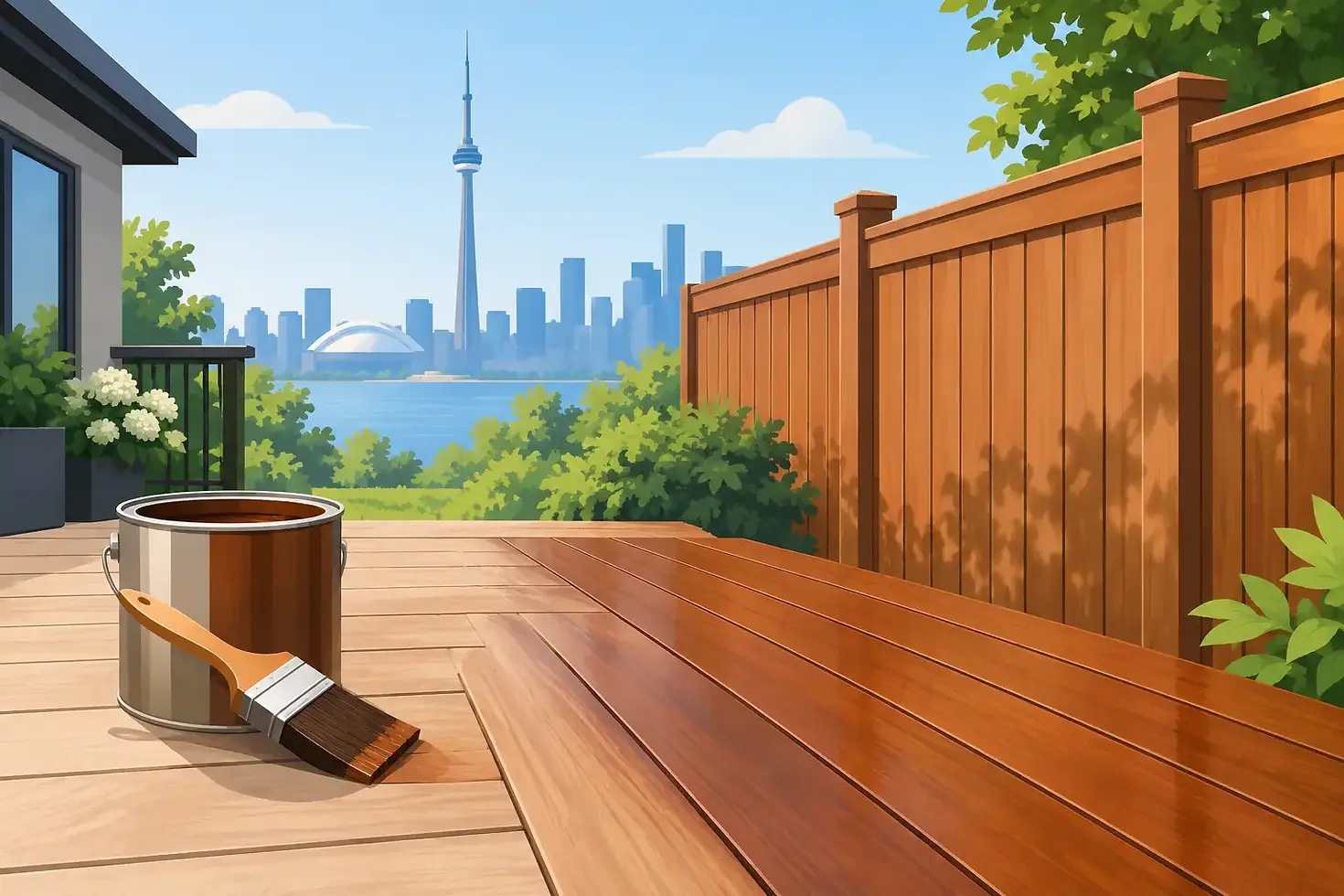
Wood Staining That Protects GTA Decks and Fences

A faded deck is not simply a curb-appeal issue. When wood staining has worn away, rain, snow, UV exposure, and daily foot traffic can start drying, splitting, and weakening the surface beneath it. For GTA homeowners and property managers, proper staining is a practical way to protect an exterior investment while giving the property a cleaner, more finished appearance.
The best results do not come from applying more product over tired wood. They come from careful preparation, selecting the right stain for the surface and exposure, and applying it evenly under suitable conditions. That process is where professional workmanship makes a visible difference.
Why Wood Staining Matters in the GTA
Outdoor wood takes a hard hit in Mississauga, Toronto, and the surrounding area. Summer sun can bleach boards and break down old coatings. Heavy rain can drive moisture into unprotected grain. Winter snow and freeze-thaw cycles can widen small cracks, while shaded areas may hold dampness long enough for mildew and algae to develop.
A quality stain helps reduce that exposure. Unlike an opaque paint film, many wood stains penetrate into the grain and allow the natural texture of the material to remain visible. Depending on the product, a stain can provide water repellency, UV protection, colour renewal, and a more uniform finish across weathered boards.
It is not a permanent shield, and the right maintenance interval depends on the wood, product, traffic level, and amount of direct sun. A south-facing deck may need attention sooner than a covered porch. Still, routine staining is far less costly and disruptive than replacing boards that have been allowed to deteriorate.
What Can Be Stained?
Decks are the most common request, but they are far from the only exterior wood surfaces that benefit from professional staining. Fences, pergolas, railings, privacy screens, garden structures, wood siding, and exterior trim can all be candidates when the material is in sound condition.
The condition of the wood matters more than its age alone. Boards with surface greying, minor checking, faded colour, and worn water repellency can often be restored successfully. Wood with deep rot, loose fasteners, persistent mould growth, extensive splitting, or structural movement should be repaired before any finish is applied. Stain will improve appearance, but it cannot correct damaged material.
For property owners preparing a home for sale or refreshing a commercial outdoor area, this distinction matters. A good-looking finish depends on a stable substrate. Addressing repairs first prevents new stain from highlighting existing defects and supports a result that lasts.
The Preparation Behind a Better Finish
Most staining failures start before the stain is opened. Dirt, old peeling coatings, mildew, sanding dust, and moisture all interfere with adhesion and absorption. If the surface is not properly prepared, stain can dry blotchy, peel prematurely, or wear unevenly after one season.
A professional process begins with an assessment of the wood, including previous coatings, damaged areas, exposed end grain, and drainage concerns. The surface may need washing, treatment for mildew, sanding, stripping, or localized board replacement. Raised fibres and rough spots should be addressed so the finished surface feels clean underfoot and accepts stain more consistently.
Drying time is equally important. Wood can look dry while still holding moisture below the surface, especially after rain or pressure washing. Applying stain too soon can trap moisture and reduce its ability to penetrate. Weather forecasts, shade, humidity, and the product manufacturer's requirements all influence the right application window.
This is one reason a low-price quote can become expensive later. Skipping preparation saves time on the day of the job, but it often shortens the life of the finish. Thorough surface preparation is not an optional add-on. It is the foundation of durable work.
Choosing the Right Type of Stain
There is no single best stain for every project. The right choice depends on the look you want, the condition of the wood, and how much ongoing maintenance you are prepared to do.
Clear and transparent stains offer the most natural look, but they provide less colour coverage and may require more frequent renewal on highly exposed surfaces. Semi-transparent stains add colour while retaining visible wood grain, making them a popular choice for decks and fences with attractive, reasonably even boards. Solid stains provide the strongest colour coverage and can help unify older wood with variations in tone or previous weathering, though they can behave more like a coating and require careful prep when it is time to reapply.
Oil-based and water-based products each have advantages. Some oil-based stains penetrate deeply and can deliver a rich finish, while many modern water-based options offer dependable colour retention, lower odour, and easier cleanup. The best choice depends on the existing finish, wood species, site conditions, and the desired maintenance plan.
Colour deserves practical consideration as well. Dark stains can look refined, but on a sunny deck they may show dust, fade more noticeably, and become hot under bare feet. Very light finishes can brighten a smaller yard but may show traffic patterns sooner. A sample area is often the safest way to confirm a colour before committing to the full surface.
Why Even Application Is Harder Than It Looks
Stain is unforgiving when it is applied inconsistently. Overlapping wet and dry areas can leave lap marks. Applying too much product can create shiny spots or sticky residue. Applying too little can leave the wood underprotected. End grain, knots, and previously weathered areas can absorb stain at different rates, creating uneven colour if the application is rushed.
Experienced staining crews manage these variables by working in logical sections, maintaining a wet edge, back-brushing where needed, and applying the product at the rate recommended for that specific surface. They also protect adjacent siding, stone, windows, landscaping, and hardscape from overspray or drips.
For a deck, details such as railings, balusters, stairs, fascia boards, and board ends take time. They are also the areas that can make a project look incomplete when they are missed or coated carelessly. A polished finish comes from treating the whole structure as one system, not only the large horizontal floor area.
Signs Your Deck or Fence Is Due for Staining
Colour fading is obvious, but water behaviour is often the more useful test. Sprinkle a small amount of water on a clean section of wood. If it beads up for a short time, the protective layer may still be working. If it absorbs quickly and darkens the board, the wood may be ready for cleaning and staining.
Other signs include surface greying, rough fibres, small cracks, worn paths near doors and stairs, mildew staining, and peeling areas on solid-stain finishes. Do not wait until boards become severely dry or warped. Earlier maintenance gives the stain a healthier surface to work with and can reduce the need for extensive restoration.
Spring through early fall is typically the practical season for exterior staining in the GTA, but the calendar is not the deciding factor. Temperature, rain, overnight moisture, and drying conditions must all be suitable. A contractor should plan around the weather rather than force an application into poor conditions.
Professional Staining Brings Accountability
A homeowner can certainly stain a small fence or simple platform deck, particularly when the wood is new, clean, and easy to access. Larger decks, older surfaces, multi-level railings, and projects with failing coatings are different. They require more prep, product knowledge, equipment, and attention to protection around the work area.
Professional service also offers clearer accountability when the project involves repairs and finishing together. Unique Painting Ltd. provides deck and wood staining as part of a broader exterior finishing service, with the experience, insured protection, and workmanship standards property owners expect when they are investing in their home or commercial property.
The value is not only in saving time. It is in having a crew that assesses the substrate, prepares it properly, applies a suitable finish, and leaves the property looking cared for rather than temporarily covered.
A well-stained deck or fence should make an outdoor space feel ready to use, not like another item on a repair list. If the water is soaking in, the colour has gone flat, or the boards feel dry and rough, a timely assessment can protect the wood before the next season makes the job bigger.


Comments